

Few places in the world define the word “safari” like the Masai Mara in Kenya and the Serengeti in Tanzania. They are neighbors, joined by the same grasslands, the same wildlife and the same annual migration. But they are managed differently, priced differently and experienced differently.
This guide compares the Masai Mara and Serengeti so you can decide which suits you, or whether a trip that includes both is the best answer.
(I’ve read your keyword as “Masai Mara and Serengeti.”)
One Ecosystem, Two Countries
The Masai Mara and the Serengeti are not separate worlds. They form a single connected ecosystem of roughly 25,000 square kilometers, divided by the Kenya-Tanzania border. Animals move across it freely, following rainfall and fresh grass.
The Mara is the northern tip of the system. The Serengeti is the vast southern and central portion. The difference in size is considerable. The Serengeti National Park covers nearly 15,000 square kilometers, while the Masai Mara National Reserve is about a tenth of that, though it is surrounded by community-owned conservancies that extend the wildlife area.
Because the border is political rather than ecological, the same wildebeest herds spend part of each year in both countries.
The Great Migration: Where Each Fits In
The migration involves about 1.5 million wildebeest, along with zebra and gazelle, moving in a loose clockwise circuit.
Serengeti-dominant months
- December to March: Herds graze the southern Serengeti and Ndutu plains. Calving peaks in February, bringing newborns and predators.
- April to June: Herds move north and west through the central and western Serengeti, including the Grumeti River area.
Masai Mara-dominant months
- July to October: Herds arrive in the northern Serengeti and the Mara. The Mara River crossings, where wildebeest plunge into crocodile-filled water, happen on both the Tanzanian and Kenyan sides of the border.
Return movement
- November to December: The herds turn south again, back into the Serengeti.
Timing shifts each year with rainfall, so exact dates are never guaranteed. The Serengeti is effectively a migration destination year-round. The Mara is most rewarding during the middle of the year.
Masai Mara: What to Expect
The Landscape
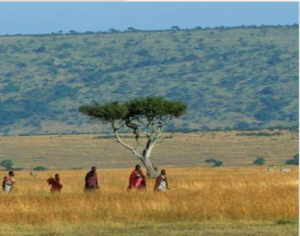
The Mara is rolling open grassland dotted with acacia and balanced-rock outcrops, which makes wildlife easy to spot. Its compact size means you can cover much of it in a few days.
The Wildlife
It is famed for big cats, particularly lions and cheetahs, and has a healthy leopard population. Elephants, giraffes, hippos, buffalo and hyenas are common, and rhinos are present but harder to find. Wildlife density is among the highest in Africa.
Access and Accommodation
The Mara is easy to reach. Daily flights from Nairobi land at airstrips inside or near the reserve, and a road transfer is possible. Accommodation ranges from budget camps to luxury tented lodges. The surrounding private conservancies are a major draw: they limit vehicle numbers, allow night drives and walking safaris, and offer a quieter experience than the main reserve.
Cultural Experience
The reserve is named after the Maasai people, who live in the area. Visits to Maasai communities are widely offered, and it is worth choosing ones that are community-run and fairly compensated.
Serengeti: What to Expect
The Landscape
“Serengeti” is commonly linked to a Maasai word meaning endless plains, and the name fits. The park contains short-grass plains in the south, acacia woodland and granite outcrops (kopjes) in the center, and wooded rivers in the west and north.
The Wildlife
Beyond the migration, the Serengeti has exceptional resident wildlife. Lions, leopards, cheetahs, elephants and large buffalo herds can be found across the park. The Seronera area in the center is known for reliable big cat sightings throughout the year.
Size and Variety
Its scale lets you choose your region based on season and what you want to see. You can stay in the south for calving, the central area for big cats, the west for the Grumeti River, or the far north for Mara River crossings.
Access and Accommodation
Most visitors arrive via Arusha and use light aircraft or long road transfers. Options include permanent lodges, tented camps and mobile camps that move with the herds. The Serengeti is typically paired with the Ngorongoro Crater and Tarangire National Park on the northern circuit.
Masai Mara vs Serengeti: Side-by-Side
| Factor | Masai Mara | Serengeti |
| Country | Kenya | Tanzania |
| Size | Compact (reserve plus conservancies) | Very large |
| Best for | Concentrated wildlife, river crossings, big cats | Scale, year-round migration, remote regions |
| Peak time | July to October | Year-round, depending on region |
| Crowds | Can be busy, especially at crossings | Generally more spread out |
| Access | Quick flights from Nairobi | Via Arusha, often with flights |
| Add-ons | Nairobi, coast, Amboseli | Ngorongoro, Tarangire, Zanzibar |
| Conservancy options | Strong, with private conservancies | Limited, with a few private concessions |
Cost Comparison
Both destinations are premium wildlife areas, and prices vary considerably by season and accommodation type.
Serengeti. Park fees in Tanzania are high and charged per person per day. Recent figures put Serengeti entry at about $84 per adult per day including VAT, with an extra concession fee for overnight stays of around $71 per adult per night for foreign non-residents. Typical safari costs, including lodging, guide and vehicle, range widely from mid-range to ultra-luxury. twowanderingsolesdumaexplorer
Masai Mara. Kenya’s park and conservancy fees also vary by season and area, and they have been revised in recent years. Conservancy stays often carry an additional fee in return for exclusivity and flexibility.
What affects both. Peak season (July to October) is significantly more expensive than the green season. Luxury camps in prime migration areas are at the top of the price range, and domestic flights, balloon safaris and private vehicles add to the total.
Rates change, so ask your operator for a fully itemized quote and verify current park fees with the official authorities.
Best Time to Visit
July to October is the classic window for Mara River crossings. Both the Mara and the northern Serengeti are at their busiest, so book months ahead.
January to March suits those who want calving season in the southern Serengeti. It is less crowded and the predator action is intense.
April to June brings green landscapes and low rates, but heavy rains can make roads difficult.
November to December sees short rains and migrating herds heading south, with lower visitor numbers in the Mara.
If you want the river crossings, aim for the middle of the year. If you want fewer people and calving drama, aim for the start of the year.
Can You Visit Both?
Yes, and many travelers do. Crossing between countries is possible via a combination of flights and ground transfers, but it requires planning:
- Visas and border rules: Each country has its own entry requirements. East African visa policies have changed in recent years, so check current rules for your nationality.
- Logistics: Cross-border charter flights, shared airstrips and border crossings by road all exist, and an experienced operator can arrange the best option.
- Timing: Between July and October, you can position yourself for crossings on either side of the border, depending on where the herds are.
A typical combined itinerary might be 4 to 5 nights in the Serengeti, followed by 3 to 4 nights in the Mara, with a Nairobi or Arusha bookend. Allow at least 10 days to avoid rushing.
Practical Tips
- Book early. Camps in migration hotspots fill up many months in advance.
- Choose camp location carefully. The herds can be many hours’ drive from your camp, so ask your operator where the herds are likely to be during your dates.
- Consider conservancies and mobile camps for fewer vehicles and a quieter experience.
- Pack neutral clothing, sunscreen, binoculars and a camera with a good zoom. Soft bags are best for light aircraft.
- Respect the wildlife. Keep to the guide’s instructions, stay quiet at sightings, and do not leave the vehicle except where permitted.
- Support responsible operators who employ local staff and contribute to community and conservation projects.
Conclusion
The Masai Mara and Serengeti are two halves of the same wildlife spectacle. The Mara offers concentrated wildlife, excellent big cat viewing, easy access from Nairobi and the thrill of river crossings. The Serengeti offers sheer scale, year-round migration action and the freedom to choose a region to match the season. Neither is better outright. Your best choice depends on when you can travel, what you most want to see, and how much time and budget you have. If you can, combining them gives you the full picture of one of the planet’s last great migrations.
Key Takeaways
- The Masai Mara and Serengeti form one connected ecosystem of roughly 25,000 square kilometers.
- The Serengeti is much larger and offers migration activity year-round, while the Mara is compact and peaks from July to October.
- Mara River crossings usually happen between July and October and can be seen on either side of the border.
- Calving season (roughly January to March) is best in the southern Serengeti.
- The Mara is easier to reach from Nairobi, and the Serengeti is usually reached via Arusha.
- Serengeti entry is around $84 per adult per day, with additional concession fees for overnight stays; Mara fees vary, so confirm current rates.
- Combining both works best with at least 10 days and good local planning.
Frequently Asked Questions
- Is the Masai Mara or the Serengeti better?
Neither is better outright. The Mara is compact with dense wildlife and quick access, while the Serengeti is vast and offers the migration across more months. - Are the Masai Mara and Serengeti connected?
Yes. They form a single ecosystem divided only by the Kenya-Tanzania border, and wildlife moves freely between them. - When is the best time to see the migration?
It depends on what you want. January to March for calving in the Serengeti, and July to October for river crossings in the northern Serengeti and Mara. - Can I visit both on one trip?
Yes. Allow at least 10 days, and use an operator who can handle the cross-border logistics, flights and visa requirements. - Which is more expensive?
Both are premium destinations. Costs depend more on season and accommodation than on the country. Park fees in the Serengeti are high and charged daily, and Mara costs vary by reserve versus conservancy. - Which is more crowded?
The Mara can feel busy at popular crossing points in peak season. The Serengeti’s size spreads visitors out, though hotspots also get crowded. - What is a conservancy, and is it worth it?
Conservancies are community-owned areas adjoining the Mara reserve. They limit vehicle numbers and often allow night drives and walking safaris, so many travelers find them worth the extra cost. - How many days do I need?
At least 3 to 4 nights for the Mara alone, 4 to 5 nights for the Serengeti, and around 10 days for both. - Is it safe to go on safari in Kenya and Tanzania?
Safari areas are generally well managed and popular with international visitors. Use a licensed operator and check your government’s current travel advice.
Note: Park fees, visa rules and migration timing change. Treat the figures here as planning estimates and confirm current details with your operator or the relevant authorities before booking.
I can also put this into a Word doc or a ready-to-publish web page if you’d like.